
Why Your Device Rep Hire Failed (It Wasn't Their Fault)
 MDliaison Team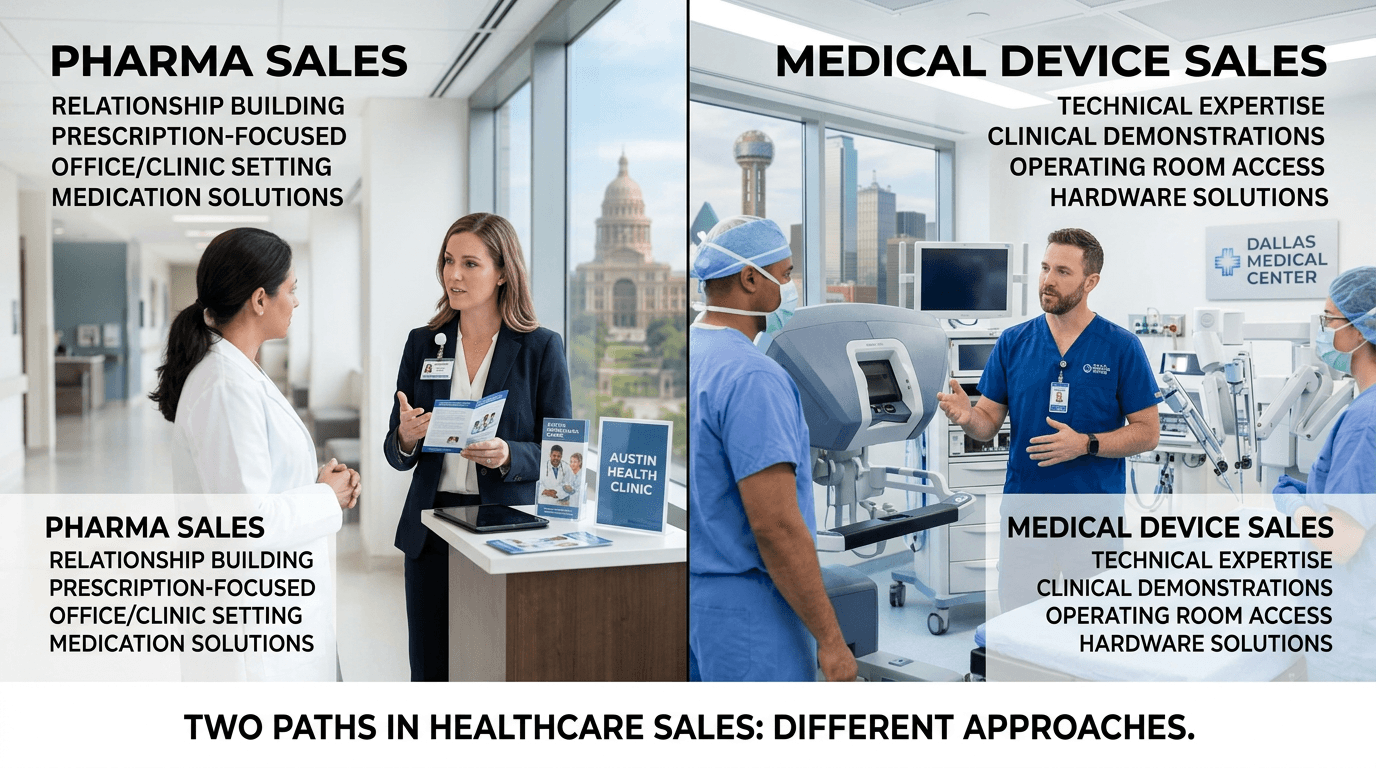
You Hired Based on Your Pharma Playbook and It Failed
A company called me last year. They had a VP of Sales who came from pharma. Good person, sold pharmaceuticals at a major company for eight years. They had a device product. They needed reps.
The VP applied their pharma hiring approach. Good sales resume? Hire them. Quota track record? Hire them. Call reluctance issues in the past but otherwise solid? Hire them anyway.
They hired someone strong on paper. And by month six, it was obvious they made a mistake.
The rep couldn't get into operating rooms. Hospitals wouldn't credential them. Surgeons didn't call them back. The things that worked in pharma selling were completely ineffective for device selling.
So the company lost six months, $30K to $40K in recruiting and training costs, and a territory that wasn't being covered. The rep left because they were frustrated. The VP realized their playbook didn't work.
The fundamental problem was this: they hired for pharma sales. They got a pharma sales rep. But they needed a device sales rep. Those are different jobs with different skill sets.
Why Pharma Sales and Device Sales Look Similar (But Aren't)
On the surface, they seem similar. Both involve selling to healthcare. Both involve building relationships. Both involve understanding clinical information.
But the day-to-day work is completely different. And most companies don't realize that until they hire the wrong person.
In pharma, you're selling to a decision-maker or an influencer. You call a hospital pharmacist. You have a conversation. You make a case for your drug. The pharmacist (or the doctor who prescribes) makes a choice. Access is straightforward. You don't need special credentials or clearances.
In device sales, you're selling to a surgeon, but not really. You're actually selling to a hospital system, an operating room, a surgical team. The surgeon is one stakeholder. You need the hospital to approve access. You need the operating room to schedule you. You need the surgical coordinator to call you when a case comes up.
A pharma rep can reach their decision-maker. A device rep can't just reach the surgeon. They have to navigate an entire institutional structure.
And here's the thing that really separates them: you have to be in the operating room. You have to be in the room while the surgeon operates. You have to understand what's happening clinically. You have to be able to troubleshoot in real-time if something goes wrong.
A pharma rep has never done this. They've never been in an OR. They've never helped during a procedure. They don't know what that world looks like.
So when a pharma rep gets hired to sell devices, they're starting from zero in ways they don't even realize.
The Moment You Realize You Made a Mistake
I've talked to hiring managers who made this mistake, and they all describe the same moment.
It's usually month two or three. The rep comes back from their first field visits and reports on what happened. Or doesn't happen.
They call the surgeon. The surgeon's office says, "We can't do that. The surgeon doesn't take calls from sales reps. You need to come through the hospital."
The rep goes to the hospital. Hospital says, "You need credentials to access the OR."
Rep says, "How do I get credentials?"
Hospital says, "We need to verify your background, your experience, whether you have liability insurance coverage for OR time, whether you have any healthcare-related incidents in your background. This takes four to eight weeks."
The pharma rep is now confused. In pharma, you just call the buyer. Here, there's an entire credentialing process they've never heard of.
Then they finally get credentialed. They show up to the OR for their first case. And they're completely lost. The surgeon is doing a procedure they don't understand. The implant is being used in a way they don't fully grasp. They're trying to be helpful but they're actually getting in the way.
By month four, the rep is frustrated. They're not making progress. They're realizing this job is different from what they understood. And if they're smart, they're looking for another job.
That's when the hiring manager realizes: we made a mistake. We hired a pharma person. We need a device person.
What Actually Matters in Device Selling
Device selling requires different strengths than pharma selling. Here's what actually matters:
Operating room experience. Not just "been in ORs." Regularly. Dozens of times. Understanding the rhythm, the dynamics, knowing how surgeons work. Being comfortable in that environment.
Existing surgeon relationships. Being able to walk into an OR and have the surgeon know you. Not as a device rep they've heard of. As someone who's been in their ORs before, who they respect, who they trust.
Clinical knowledge. Understanding the surgical procedure deeply. Knowing implant alternatives and when each is appropriate. Being able to have a conversation with a surgeon about clinical nuance, not just product benefits.
Institutional navigation. Understanding how hospitals actually work. Knowing that the surgeon might want your device but the material manager might block you. Knowing how to work through hospital politics without making anyone angry.
Credentialing readiness. Not having barriers to hospital credentialing. Having been through the process before. Knowing what hospitals look for in terms of background and experience.
Pharma doesn't teach any of these. So when you hire a pharma person, they're learning all of this on the job. And it's hard. And they fail.
The companies that win are the ones hiring people who already have this background. People who don't need training on the operating room environment because they've spent hundreds of hours there. People who don't need training on surgeon relationships because they already have them.
Why You Can't Tell the Difference in an Interview
Here's the problem for hiring managers. You can interview someone and they'll sound good.
Pharma rep: "I have 10 years of sales experience. I've worked in healthcare. I understand hospital dynamics. I'm a closer."
On paper, that sounds like a device rep. In reality, it's not even close.
But you can't always tell in an interview. They know the right language. They know what to say. You ask, "Tell me about your hospital sales experience," and they talk about hospital pharmacy calls they made. It sounds like hospital experience.
It's only when they get in the field that you realize: hospital pharmacy experience is completely different from hospital device experience. They don't know how to navigate OR access. They don't know surgeon politics. They don't have the relationships.
So the vetting problem is real. You can't just interview your way to the right hire. You need to evaluate for specific experience that most hiring managers don't know to look for.
The Texas Factor
Texas complicates this further because the market is consolidated and relationship-driven.
When a new rep shows up from outside Texas without Texas surgeon relationships, surgeons are skeptical. In bigger markets, you can build relationships slowly. In Texas, the same surgeons work at multiple hospital systems. Word travels. If you're new, surgeons hear about it. They're not going to be your first cases.
A rep with existing Texas relationships gets cases immediately. A rep without Texas relationships is building credibility from scratch in a consolidated market. That's slow.
So not only do you need device experience. You need Texas device experience. That narrows the pool even more.
And it's exactly why pharma reps coming into Texas device sales struggle. They don't have device experience. And they don't have Texas device relationships.
The Moment the Mistake Becomes Obvious
I was talking to a hiring manager who hired a pharma rep for device sales. He told me the story of when he realized it wasn't going to work.
The rep came back from their first week of field visits. The hiring manager asked how it went.
Rep said, "I'm confused. I called Dr. Smith (a surgeon they identified as a target). The surgeon's office said they don't take calls from sales reps. They said I need to come through the hospital and get credentials to access the OR."
The hiring manager thought, "OK, so they're learning the process. That's fine."
But that's the problem right there. In pharma, you don't need to get credentials to access a hospital. You call the pharmacy and you're in.
In device, the entire selling process is different. The rep didn't know this. And they're now learning it on the job, which means they're behind schedule, confused, and losing faith in the role.
By month four, the rep had finally gotten credentialed. But they'd wasted months on basics that a device rep would already understand. And they'd built a bad impression with surgeons who thought the rep didn't know how the market works.
What Makes a Real Device Rep (and Why You Can't Tell in an Interview)
So what does a real device rep actually look like?
They've been in operating rooms. Not once. Dozens of times. They know the rhythm of an OR. They know what surgeons like. They know how long cases take. They know what questions surgeons have in the middle of a procedure.
They have surgeon relationships. Specific surgeons they've worked with. Surgeons who know them by name. Surgeons who would take their call. That matters because surgeons are protective of their time.
They understand the clinical side at a level that goes beyond reading a product sheet. They can have a conversation with a surgeon about technique, about implant selection, about why one approach might be better than another for a specific patient. They don't sound like they're reading from marketing materials.
And they've navigated hospital systems before. They know that just because a surgeon wants your device doesn't mean the hospital will approve it. They know how to work with material managers. They know how to navigate purchasing. They know how to address objections from people who aren't surgeons but who can still block you.
Can you tell if someone has this in an interview? Honestly, not really. A smart pharma rep can say the right things. They can talk about "clinical knowledge" and "hospital relationships" without having either.
The only way to really know is to verify it. Talk to surgeons they claim to know. Ask specific clinical questions and listen for whether they understand the nuance. Dig into their hospital experience and find out if they actually navigated it or if they just visited.
And that's hard to do yourself. Most hiring managers don't have the expertise to do that verification well.
Why This Matters in Texas Specifically
Texas device markets are relationship-driven. The consolidation means that surgeons talk to each other. When one surgeon tries your device and likes it, other surgeons hear about it quickly.
But the flip side is that surgeons are skeptical of people they don't know. New reps without Texas relationships are starting from a disadvantage.
A rep with Texas device relationships walks in with credibility. Surgeons know them. They've worked cases with them before. That opens doors immediately.
A pharma rep with no Texas device relationships is trying to build from zero in a market where surgeons already have trusted advisors. That's a much harder climb.
So when you hire a pharma person for a Texas device territory, you're not just hiring someone without device experience. You're hiring someone without Texas device relationships in a market where those relationships matter tremendously.
Time to realize hire isn't working
Recruiting and onboarding cost wasted
Total cost of wrong hire
Skip the Hiring Risk, Use Pre-Vetted Professionals
Evaluating device reps is complex. Let us handle the vetting so you get people who actually know device selling. We evaluate for OR experience, clinical knowledge, and market understanding. You get the right person, not just the best interview.
Skip the Hiring Risk, Use Pre-Vetted Professionals